
Swim Meet 101
Swim meets are a fun and rewarding family experience—an opportunity for everyone to spend time together while supporting the team.
The guidelines below are designed to help you navigate meet days with confidence. While the information may seem detailed, it’s meant to prepare you as thoroughly as possible. If you have questions, don’t hesitate to ask a coach or an experienced swim parent.
Packing List for a Meet
Preparing ahead of time is key to a smooth meet day. Early summer weather can be unpredictable, so be sure to check the forecast and pack accordingly. Some evenings may be cool, while others can be quite hot.
Suggested items:
- Towels
- Picnic blanket
- Printed heat sheet (if available)
- Swim caps
- Goggles (plus an extra pair)
- Sunscreen
- Water and/or sports drinks
- Healthy snacks
- Hat or visor
- Lawn chairs (for parents)
- Sweatshirt or warm layers (for cooler temperatures)
- Cooling items (fan, cold towel, ice pack, spray bottle)
- Sharpies or highlighters
- Games or quiet activities
- Cash for concessions
Before the Meet Begins
- Check Your Email. After 3:00 PM on meet days, watch for an email from the coach with heat sheets (when available). Printing your heat sheet in advance is very helpful.Please note: Heat sheets depend on when entries are received from the opposing team, so timing may vary.
- Arrive Early. Plan to arrive at least 15 minutes before your team’s scheduled warm-up time. This information will be shared on the website and in team emails.
- Set Up Your Area. Once you arrive, find a place in the team bullpen area to set up your swimmer’s belongings (bags, towels, blankets, etc.).Parent volunteers should check in at the volunteer coordinator table upon arrival.
- Swimmer Check-In. Make sure your swimmer checks in with the bullpen volunteers as soon as they arrive.
- Mark Events on Swimmer’s Arm. Using a Sharpie, write each event number, heat number, and lane number on your swimmer’s arm. This helps both swimmers and volunteers keep track of when and where the swimmer needs to be.

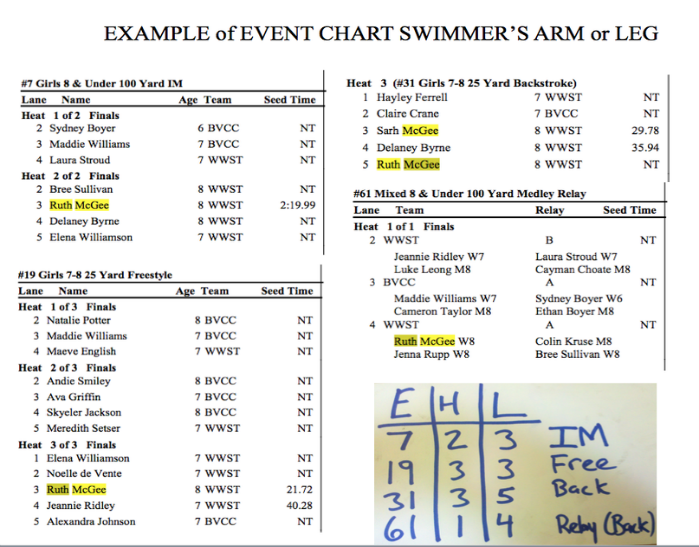
6. Warm-Ups. Swimmers should report to the pool with their cap and goggles for warm-ups as directed by the coaches. It is important that all swimmers participate in team warm-ups.
7. Post Warm-Up. After warm-ups, swimmers should return to the bullpen area and remain there until their first event is called. This is a good time to use the restroom, hydrate, and get settled.
Note: There can be significant downtime during meets—consider bringing quiet activities for swimmers.
During the Meet
- Meet Start. Meets typically begin 10–15 minutes after warm-ups conclude.
-
Using the Heat Sheet. The heat sheet outlines all events and swimmers, organized by “seed time” (previous best times).
- Swimmers new to an event are listed as “NT” (No Time) and usually swim in earlier heats.
- Events are organized from slowest to fastest (Heat 1 = slowest).
- Times may vary in format depending on whether the pool is measured in yards or meters.
- Event Line-Up. Volunteers (bullpen workers, Clerk of Course, and block assistants) help organize swimmers. However, it is the responsibility of each parent/guardian to ensure their swimmer reports to the bullpen on time.Swimmers are encouraged to sit with their age group.
-
Events & Strokes. Swimmers may compete in 3 of the following individual events at meets:
- Freestyle
- Backstroke
- Breaststroke
- Butterfly
- Individual Medley (Butterfly, Backstroke, Breaststroke, Freestyle)
- Relay events include:
- Medley Relay (Backstroke, Breaststroke, Butterfly, Freestyle)
- Freestyle Relay
- Coaches assign events based on what best supports each swimmer’s development and confidence.
- Event Timing. Event lengths vary significantly. For example, a 200 Medley Relay may take several minutes, while a 25 Freestyle may last under 30 seconds.
- Officials. Certified officials are present to ensure all races follow established swim rules and that strokes are performed legally.
-
Scoring.
- Individual Events:1st place – 5 points2nd place – 3 points3rd place – 1 point
- Relay Events:1st place – 3 points2nd place – 1 point
- Disqualifications (DQ). A swimmer may be disqualified if a stroke, turn, start, or finish is not performed according to official rules. Disqualified swimmers do not earn points for that event.
- Questions or Concerns. All questions regarding results, officiating, or meet operations must be directed to the Parent Representative. They will address concerns through the proper channels.
After Your Swimmer Competes
- Check Time. Swimmers may ask the lane timers for their official time after their race.
- Recovery Time. Swimmers should return to the team area to rest, hydrate, and have a light snack if needed. Staying hydrated throughout the meet is essential.
- Prepare for Next Event. Swimmers should remain attentive and ready when their next event is called.
- Team Support. Swimmers are encouraged to stay until the end of the meet and cheer on their teammates.Parents assigned to volunteer roles must remain for the duration of their shift.
- Clean-Up. Please help keep the facility clean by picking up all personal items and trash.
-
Results & Ribbons. Meet results are typically emailed after the meet. Ribbons can be picked up from the team ribbon box at the pool. Ribbons are awarded for:
- 1st, 2nd, and 3rd place finishes
- New personal best times